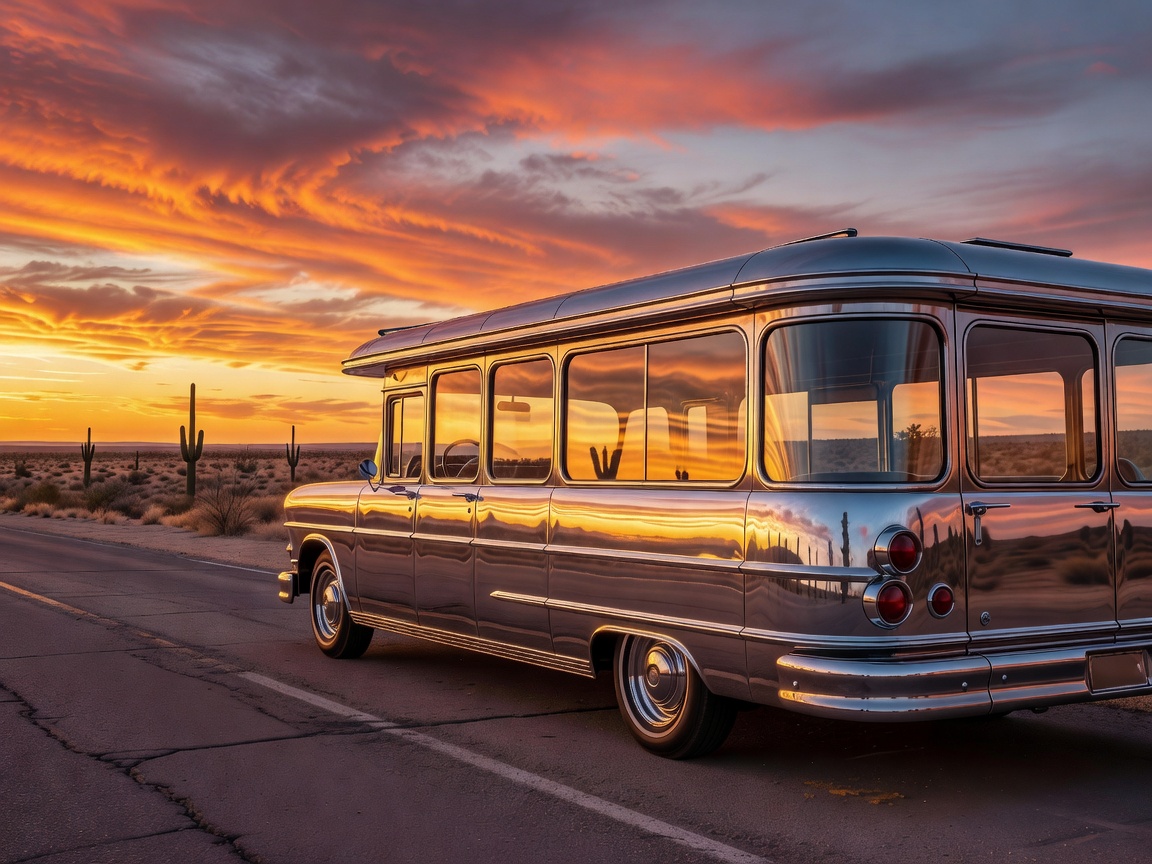
There is perhaps no ribbon of asphalt more deeply woven into the American mythological fabric than Route 66. Stretching from the shores of Lake Michigan to the Santa Monica Pier, the "Mother Road" historically served as the primary artery for westward migration. Today, it serves an equally compelling purpose for the gastronomically curious: a sprawling, cross-country museum of the classic American diner.
The Chicago Start: Heavy and Hearty
The journey begins in the Midwest, where the winters are brutal and the calories are strictly necessary. The culinary landscape at the eastern terminus of Route 66 is defined by an unpretentious, stick-to-your-ribs philosophy. Early morning stops in the urban and suburban sprawl of Illinois often feature historic diners operating out of converted rail cars or classic prefabricated stainless steel boxes from the 1930s.
Here, the breakfast menus are dominant. Expect to find towering stacks of pancakes, thick-cut bacon, and the ubiquitous "skillet"—a cast-iron pan loaded with hash browns, eggs, cheese, and sausage gravy. It is a dense, heavily layered style of eating designed to fuel agricultural and industrial workers. Coffee is served black, fast, and endlessly refilled by waitresses who have elevated efficiency to an art form.
The Midwest Heart: Breadbasket Bounties
As the route winds through Missouri and Kansas, the agricultural heartland dictates the menu. This is the empire of the open-faced sandwich. Beef and poultry, roasted low and slow, are piled atop thick slices of white bread and mercilessly drowned in rich, savory gravies. It is here you will also notice a distinct shift toward the Midwestern pork tenderloin sandwich—a pounded, breaded, and fried cutlet that comically overhangs the boundaries of its standard-sized hamburger bun.
Dessert culture in this region is treated with utmost reverence. Diners display their wares in rotating, refrigerated glass cases. The selection criteria for a good Midwestern diner pie is simple: the meringue should be impossibly high, the crust should crack rather than crumble, and the fruit fillings should err on the side of tartness to balance the sugar. Cherry, apple, and rhubarb rule supreme.
The Southwest Desert: A Shift in Flavor
Crossing into Oklahoma and the Texas Panhandle, the landscape flattens and stretches out. The diner culture here begins to merge with cattle country traditions. Steaks—specifically chicken-fried steak smothered in cream gravy—replace the pork cuts of the Midwest. The burgers become noticeably thicker, often griddle-smashed to achieve a lacey, caramelized crust around the edges.
By the time the road enters New Mexico and Arizona, a beautiful cultural collision occurs. The traditional American diner template adopts regional Southwestern ingredients. The standard cheeseburger is suddenly topped with roasted green chiles. Scrambled eggs are served alongside chorizo and wrapped in flour tortillas instead of resting next to toast. The aesthetics of the diners themselves shift as well; classic chrome gives way to adobe-style architecture, though the iconic neon signs remain, piercing the dark desert nights to guide hungry travelers off the highway.
The California Finish: Googie Architecture and Fresh Produce
The final stretch through the Mojave Desert and into the Los Angeles basin introduces the traveler to the zenith of mid-century automotive culture: Googie architecture. Diners in Southern California were designed to catch the eye of motorists traveling at high speeds, featuring sweeping cantilevered roofs, starburst motifs, and expansive walls of plate glass.
The menus reflect the agricultural bounty of California. While you can still find a classic patty melt—a structural marvel of ground beef, caramelized onions, and melted Swiss cheese pressed between slices of rye bread—you will also see the introduction of fresh avocados, sprouts, and lighter, citrus-based dressings. The milkshakes, often made with locally sourced dates or fresh strawberries, are the perfect restorative beverage after the long, dry drive through the desert.
Planning Your Diner Pilgrimage
When selecting stops along this historic route, look for the subtle signifiers of authenticity. Gravel parking lots populated by local pickup trucks, faded but functional neon signage, and menus with localized vernacular (like "loose meat" sandwiches or "Navajo tacos") are highly reliable indicators of quality. Avoid locations heavily leaning into manufactured nostalgia; the best diners do not know they are historical landmarks—they simply believe they are serving lunch.
To pace yourself over the two-week journey, embrace the concept of sharing. The portions along Route 66 are notoriously large, designed for the American appetite of yesteryear. Split a piece of pie, share a side of onion rings, and savor the slow, deliberate pace of eating like a local across the vastness of the American continent.